However, Proenneke’s legacy was at risk of remaining just that—a personal story, hidden on film reels in a dusty closet. This is where the Internet Archive intervenes. As a digital library offering free, permanent access to millions of books, films, software, and websites, the Archive functions as a modern-day Noah’s Ark for cultural memory. By hosting Alone in the Wilderness , the Internet Archive has transformed a niche documentary from 1968 into a timeless resource. Millions of viewers who have never chopped wood or slept under a tarp can now witness the slow, satisfying rhythm of building a life from scratch. The Archive ensures that Proenneke’s solitude is not lost to physical decay or copyright obscurity but is instead perpetually available for anyone seeking inspiration, instruction, or simply two hours of visual peace.
The juxtaposition is striking. The Internet Archive is a testament to collective intelligence and connectivity—a global library built on servers, bandwidth, and collaboration. Proenneke’s cabin was a testament to radical individualism—a home built on muscle, stone, and isolation. Yet, the two are symbiotic. The digital archive preserves the analogue hermit. Without the former, the latter might fade into a forgotten footnote of Alaskan history. With the Archive, Proenneke becomes a ghost in the global machine, a digital specter whose hands forever shape logs for a new generation of dreamers.
Ultimately, the story of Alone in the Wilderness as preserved by the Internet Archive teaches us a vital lesson about modern life. We often assume that solitude and connectivity are opposites. Proenneke’s archive suggests otherwise. True solitude—the kind that allows for deep work, reflection, and craft—is a resource as precious as clean water or old-growth forest. The Internet Archive, at its best, does not destroy that solitude; it curates and protects it. It offers us a window into a quiet world so that we might carry a piece of that stillness back into our own noisy lives. By clicking play on a Proenneke video, we become digital hermits for an hour, sitting by the fire of a man who chose to be alone—and in that aloneness, found a world.
At its surface, Alone in the Wilderness is a manual of self-reliance. Proenneke’s craftsmanship is mesmerizing. We watch him carve wooden hinges, chisel dovetail notches, and construct a stone chimney with meticulous patience. The narrative is devoid of dialogue; the soundtrack is the crunch of snow, the cry of a loon, and Proenneke’s own quiet, deliberate narration. In an era of constant connectivity, his life represents the ultimate counterculture—a rejection of noise, schedules, and social obligation. He is not escaping to something, but rather into the raw, unfiltered present tense of nature. The essay of his life argues that solitude is not loneliness; it is a deliberate stage for deep observation and meaningful labor.
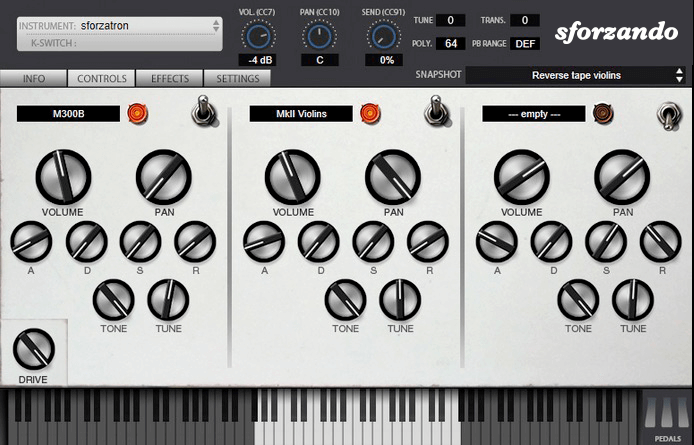
The SFZ Format is widely accepted as the open standard to define the behavior of a musical instrument from a bare set of sound recordings. Being a royalty-free format, any developer can create, use and distribute SFZ files and players for either free or commercial purposes. So when looking for flexibility and portability, SFZ is the obvious choice. That’s why it’s the default instrument file format used in the ARIA Engine.
OEM developers and sample providers are offering a range of commercial and free sound banks dedicated to sforzando. Go check them out! And watch that space often, there’s always more to come! You are a developer and want to make a product for sforzando? Contact us!
You can also drop SF2, DLS and acidized WAV files directly on the interface, and they will automatically get converted to SFZ 2.0, which you can then edit and tweak to your liking!
Download for freeInstrument BanksSupport
However, Proenneke’s legacy was at risk of remaining just that—a personal story, hidden on film reels in a dusty closet. This is where the Internet Archive intervenes. As a digital library offering free, permanent access to millions of books, films, software, and websites, the Archive functions as a modern-day Noah’s Ark for cultural memory. By hosting Alone in the Wilderness , the Internet Archive has transformed a niche documentary from 1968 into a timeless resource. Millions of viewers who have never chopped wood or slept under a tarp can now witness the slow, satisfying rhythm of building a life from scratch. The Archive ensures that Proenneke’s solitude is not lost to physical decay or copyright obscurity but is instead perpetually available for anyone seeking inspiration, instruction, or simply two hours of visual peace.
The juxtaposition is striking. The Internet Archive is a testament to collective intelligence and connectivity—a global library built on servers, bandwidth, and collaboration. Proenneke’s cabin was a testament to radical individualism—a home built on muscle, stone, and isolation. Yet, the two are symbiotic. The digital archive preserves the analogue hermit. Without the former, the latter might fade into a forgotten footnote of Alaskan history. With the Archive, Proenneke becomes a ghost in the global machine, a digital specter whose hands forever shape logs for a new generation of dreamers. alone in the wilderness internet archive
Ultimately, the story of Alone in the Wilderness as preserved by the Internet Archive teaches us a vital lesson about modern life. We often assume that solitude and connectivity are opposites. Proenneke’s archive suggests otherwise. True solitude—the kind that allows for deep work, reflection, and craft—is a resource as precious as clean water or old-growth forest. The Internet Archive, at its best, does not destroy that solitude; it curates and protects it. It offers us a window into a quiet world so that we might carry a piece of that stillness back into our own noisy lives. By clicking play on a Proenneke video, we become digital hermits for an hour, sitting by the fire of a man who chose to be alone—and in that aloneness, found a world. However, Proenneke’s legacy was at risk of remaining
At its surface, Alone in the Wilderness is a manual of self-reliance. Proenneke’s craftsmanship is mesmerizing. We watch him carve wooden hinges, chisel dovetail notches, and construct a stone chimney with meticulous patience. The narrative is devoid of dialogue; the soundtrack is the crunch of snow, the cry of a loon, and Proenneke’s own quiet, deliberate narration. In an era of constant connectivity, his life represents the ultimate counterculture—a rejection of noise, schedules, and social obligation. He is not escaping to something, but rather into the raw, unfiltered present tense of nature. The essay of his life argues that solitude is not loneliness; it is a deliberate stage for deep observation and meaningful labor. By hosting Alone in the Wilderness , the