Literature

Courselab 2.7 Full May 2026

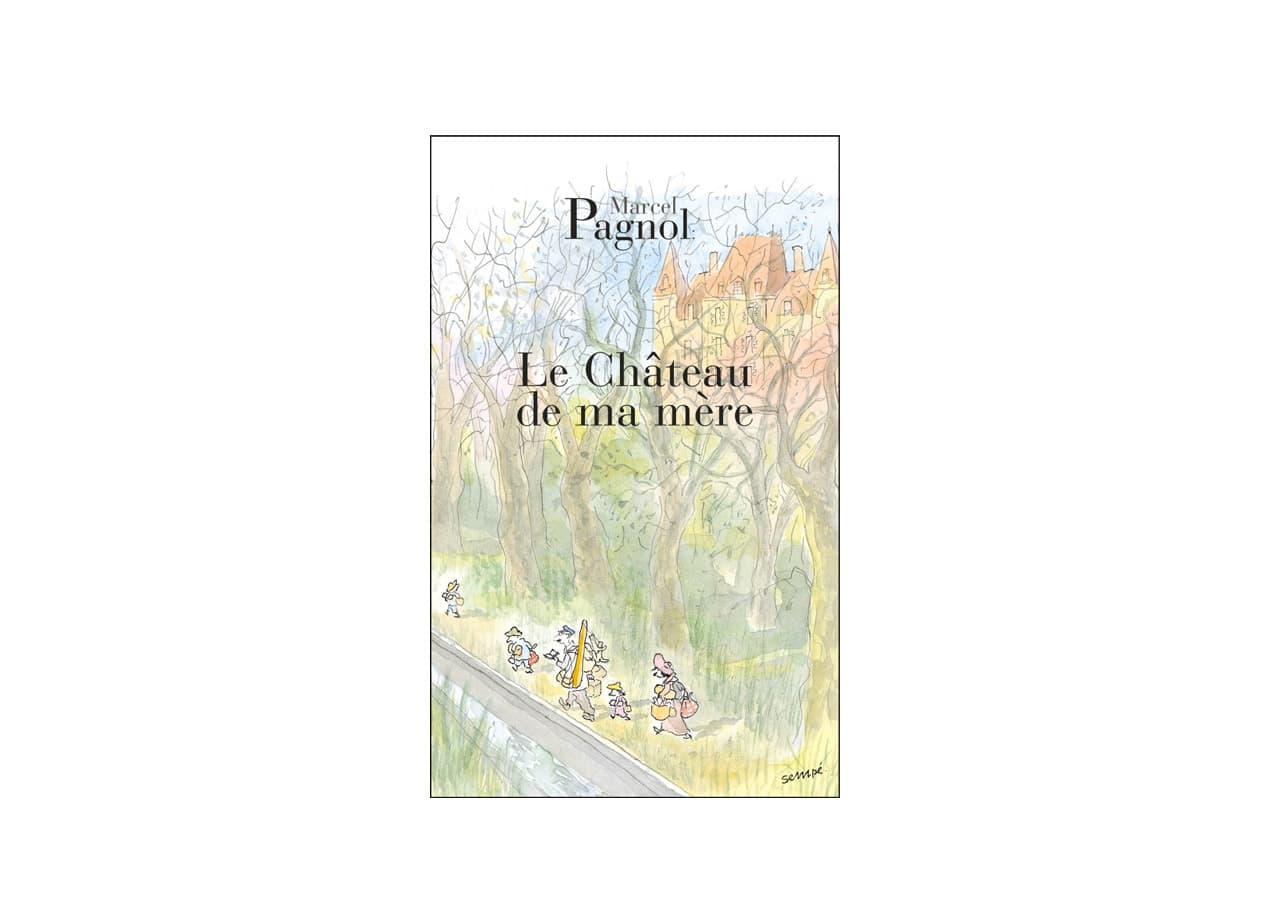
The most beautiful book on child friendship: one morning while hunting in the hills, Marcel meets the little peasant, Lili des Bellons. His vacations and his whole life will be illuminated by it.

The most beautiful book about childhood friendship.

Summary

One year after La Gloire de mon père (My Father’s Glory), Marcel Pagnol thought he would conclude his childhood memories with this Château de ma mère (1958), the second part of what he considered as a diptych, ending with the famous scene of the ferocious guardian frightening the timid Augustine. Little Marcel, after the family tenderness, discovered friendship with the wonderful Lili, undoubtedly the most endearing of his characters. The book closes with a melancholic epilogue, a poignant elegy to the time that has passed. In it, Pagnol strikes a chord of gravity to which he has rarely accustomed his readers.

Hey friend! “
I saw a boy about my age looking at me sternly. You shouldn’t touch other people’s traps,” he said. “A trap is sacred!
” 

– “I wasn’t going to take it,” I said. “I wanted to see the bird.” 

He approached: “it was a small peasant. He was, brown, with a fine Provencal face, black eyes and long girlish lashes.”

Buy online

You will also like:

Courselab 2.7 Full May 2026

I’d love to hear your legacy war stories or your tricks for squeezing HTML5 compatibility out of it. Drop a comment or find me on LinkedIn. Disclaimer: This post is for educational and archival purposes. CourseLab is a trademark of WebSoft Ltd. Always use software in compliance with applicable licenses.

Still, for those of us who cut our teeth on its event-action tables and XML spelunking, CourseLab 2.7 Full deserves a moment of respect. It proved that you didn’t need a cloud subscription to build serious e-learning. And in an age where you rent everything, that quiet, offline, perpetual truth feels more radical than ever. courselab 2.7 full

Let’s unpack why this nearly two-decade-old piece of software still matters, where it excels, and where it finally meets its limits. First, a crucial clarification. CourseLab existed in two tiers: the free Standard edition and the paid Full edition. The Standard version was remarkable for its price (free), but it was crippleware in a smart way: no AICC/SCORM export, limited to 10 objects per module. I’d love to hear your legacy war stories

For the uninitiated, CourseLab was (and in many circles, still is) a Windows-based, offline authoring tool that offered a compelling value proposition: Version 2.7, specifically the “Full” edition, represents a fascinating inflection point in the history of digital learning. CourseLab is a trademark of WebSoft Ltd

In the rapid, relentless march of e-learning technology—where xAPI, LRS, and cloud-native authoring tools dominate the headlines—it’s easy to forget the quiet workhorses that defined an era. One such tool, often relegated to dusty forums and legacy course archives, is CourseLab 2.7 Full .

But the world moved on. Modern learners expect mobile-first, responsive, accessible (WCAG 2.1), and analytics-rich content. CourseLab delivers none of those out of the box.
I’d love to hear your legacy war stories or your tricks for squeezing HTML5 compatibility out of it. Drop a comment or find me on LinkedIn. Disclaimer: This post is for educational and archival purposes. CourseLab is a trademark of WebSoft Ltd. Always use software in compliance with applicable licenses.

Still, for those of us who cut our teeth on its event-action tables and XML spelunking, CourseLab 2.7 Full deserves a moment of respect. It proved that you didn’t need a cloud subscription to build serious e-learning. And in an age where you rent everything, that quiet, offline, perpetual truth feels more radical than ever.

Let’s unpack why this nearly two-decade-old piece of software still matters, where it excels, and where it finally meets its limits. First, a crucial clarification. CourseLab existed in two tiers: the free Standard edition and the paid Full edition. The Standard version was remarkable for its price (free), but it was crippleware in a smart way: no AICC/SCORM export, limited to 10 objects per module.

For the uninitiated, CourseLab was (and in many circles, still is) a Windows-based, offline authoring tool that offered a compelling value proposition: Version 2.7, specifically the “Full” edition, represents a fascinating inflection point in the history of digital learning.

In the rapid, relentless march of e-learning technology—where xAPI, LRS, and cloud-native authoring tools dominate the headlines—it’s easy to forget the quiet workhorses that defined an era. One such tool, often relegated to dusty forums and legacy course archives, is CourseLab 2.7 Full .

But the world moved on. Modern learners expect mobile-first, responsive, accessible (WCAG 2.1), and analytics-rich content. CourseLab delivers none of those out of the box.