Marcus thought about his own diploma, hanging on a wall behind a stack of unpaid bills. He thought about the word “dropout” as both a failure and a rebellion. Kanye had turned it into an origin story. Marcus had turned it into a two-bedroom apartment he could barely afford.
He listened to “Spaceship” next, the one where Kanye sings about hating his job at The Gap. “I’ve been working this graveshift, and I ain’t made shit.” Marcus laughed, but it came out hollow. He worked a graveshift too—security at a downtown office building, walking empty hallways so the executives could sleep soundly. They didn’t even know his name. They called him “the night guy.”
He clicked.
Marcus thought about his own diploma, hanging on a wall behind a stack of unpaid bills. He thought about the word “dropout” as both a failure and a rebellion. Kanye had turned it into an origin story. Marcus had turned it into a two-bedroom apartment he could barely afford.
He listened to “Spaceship” next, the one where Kanye sings about hating his job at The Gap. “I’ve been working this graveshift, and I ain’t made shit.” Marcus laughed, but it came out hollow. He worked a graveshift too—security at a downtown office building, walking empty hallways so the executives could sleep soundly. They didn’t even know his name. They called him “the night guy.”
He clicked.
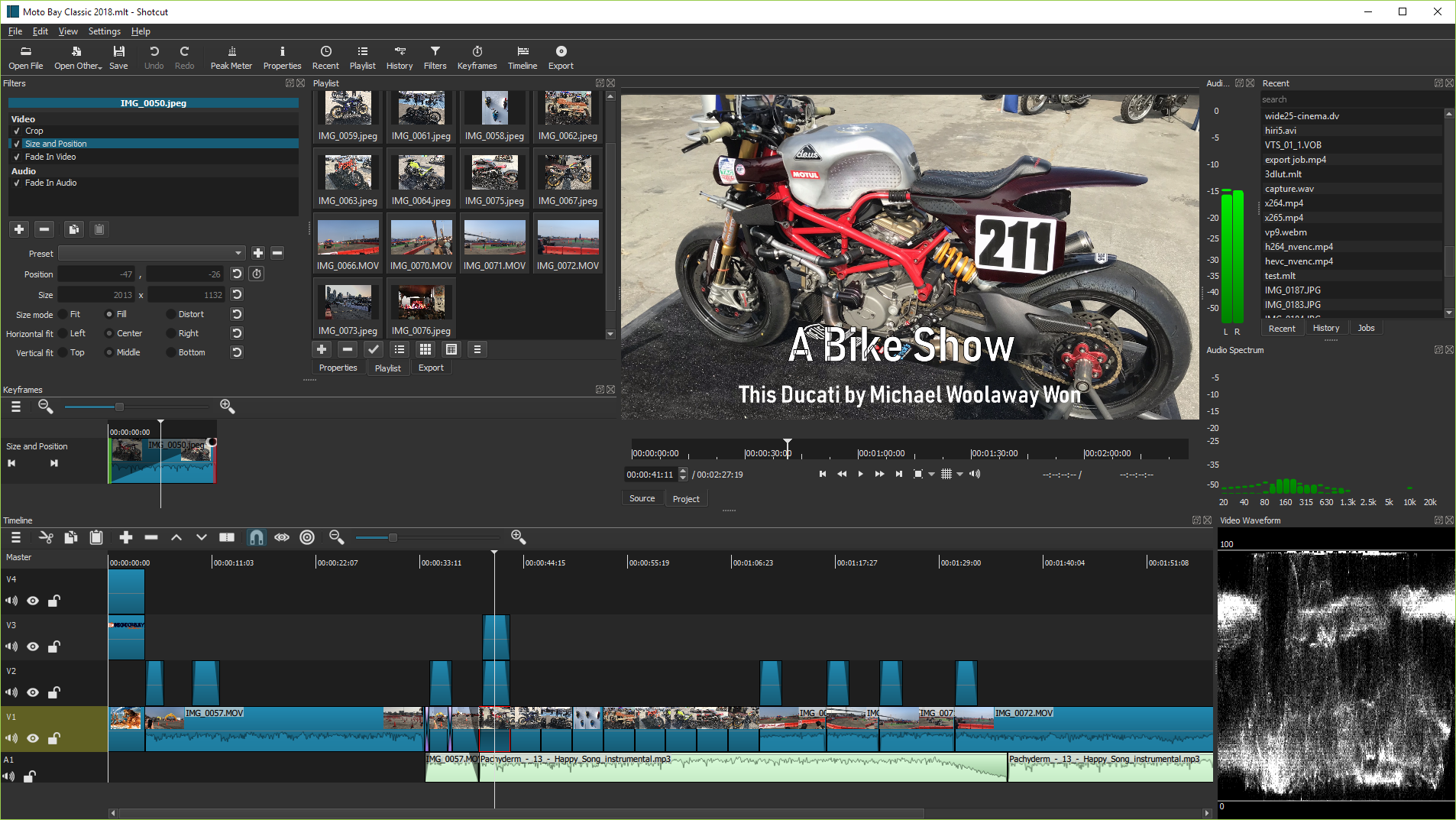
Shotcut was originally conceived in November, 2004 by Charlie Yates, an MLT co-founder and the original lead developer (see the original website). The current version of Shotcut is a complete rewrite by Dan Dennedy, another MLT co-founder and its current lead. Dan wanted to create a new editor based on MLT and he chose to reuse the Shotcut name since he liked it so much. He wanted to make something to exercise the new cross-platform capabilities of MLT especially in conjunction with the WebVfx and Movit plugins.
Lead Developer of Shotcut and MLT