For Mentzer, the only valid purpose of a workout is to provide a growth stimulus sufficient to trigger the body’s adaptive repair mechanism. Once that stimulus is delivered, further work becomes not just useless but counterproductive. He famously analogized training to lighting a fire: you need only one match. Striking a second, third, or tenth match does not make the fire burn hotter—it simply wastes matches. Likewise, after one all-out set to muscular failure, additional sets provide no extra growth benefit, only deeper fatigue. Mentzer anchored Heavy Duty in the concept of the Inroad , a term borrowed from Arthur Jones (creator of Nautilus equipment). The Inroad refers to the percentage of a muscle’s momentary capacity that is exhausted during a set. Most trainees stop a set when the repetition slows—typically around 70-80% Inroad. Mentzer demanded 100% Inroad , meaning you continue a repetition until concentric movement is impossible , even with maximal voluntary effort. That point— positive failure —is where the growth signal is strongest.
In the pantheon of bodybuilding gurus, few figures are as simultaneously revered, misunderstood, and polarizing as Mike Mentzer. A professional bodybuilder who stood onstage alongside Arnold Schwarzenegger and Frank Zane, Mentzer later rejected the high-volume, high-frequency “Golden Era” methods he had once practiced. Instead, he formulated a radical, logical, and ruthlessly efficient system he called Heavy Duty . Far from a simple set of workout tips, Heavy Duty is a complete, philosophically grounded critique of conventional training—one that challenges the very axioms of effort, frequency, and recovery. The Core Premise: Stimulation, Not Exhaustion At its heart, Heavy Duty rests on one unshakeable principle: growth is a response to stimulation , not a direct product of work. Mentzer argued that most bodybuilders confuse activity with productivity. Doing more sets, more exercises, and more days per week does not create more muscle; it merely accumulates fatigue, which actively inhibits the anabolic response.
Mentzer’s mistake was not his emphasis on intensity, but his absolute rejection of any volume or frequency modulation. Today, most evidence-based coaches advocate a approach: start with very low volume, add only what is necessary to progress, and use high intensity strategically. This is Mentzer’s idea, tempered by practicality. Conclusion Mike Mentzer’s Heavy Duty is not a perfect training system, but it is a perfect critique . It exposes the cargo-cult logic of traditional bodybuilding—the mindless accumulation of sets, reps, and days—and forces every trainee to ask: Why am I doing this? What is the stimulus, and have I already delivered it? For the over-trained, the time-poor, and the chronically stagnant, Heavy Duty remains a powerful reset button. Used as a principle rather than a dogma, it transforms training from a test of endurance into a test of will—and reminds us that in muscle growth, as in all things, more is not always better. Sometimes, the heaviest duty is knowing when to stop.
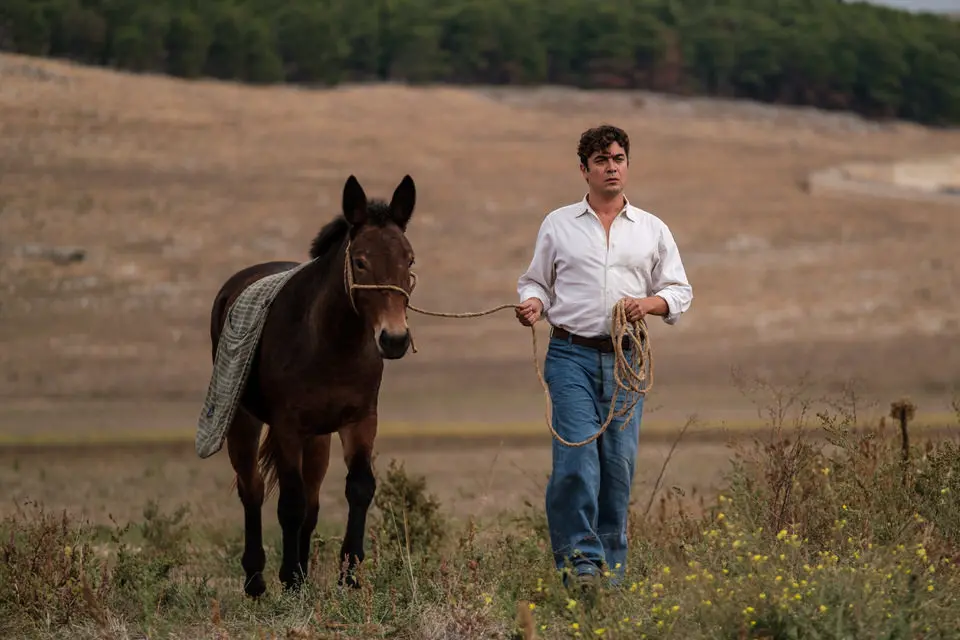
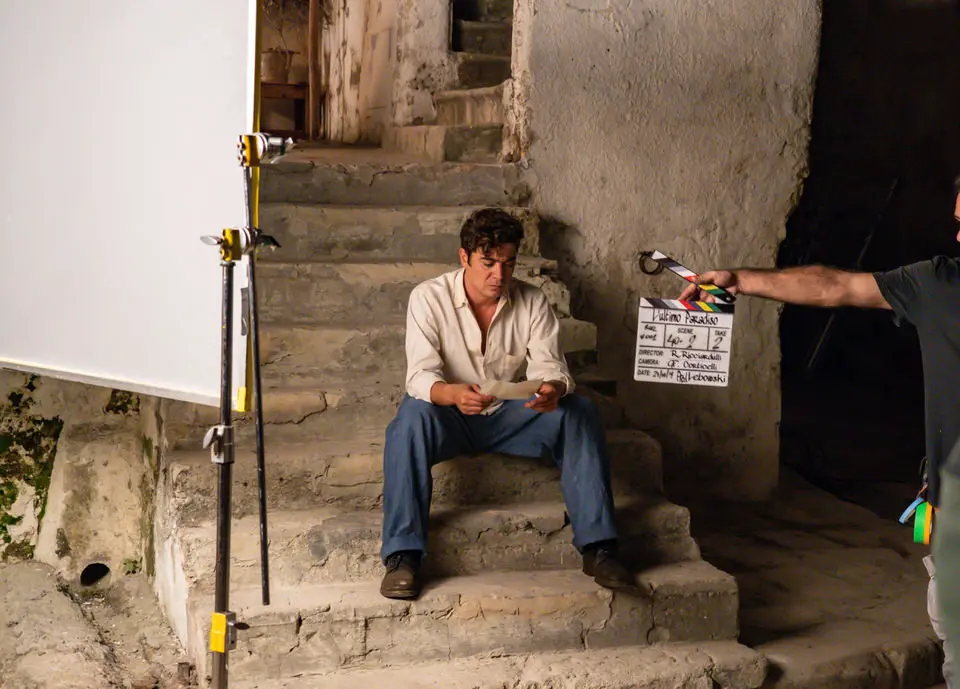
The director Rocco Ricciardulli, from Bernalda, shot his second film, L’ultimo Paradiso between October and December 2019, several dozen kilometres from his childhood home in the Murgia countryside on the border of the Apulia and Basilicata regions. The beautiful, albeit dry and arid landscape frames a story inspired by real-life events relating to the gangmaster scourge of Italy’s martyred lands. It is set in the late 1950’s, an era when certain ancestral practices of aristocratic landowners, archaic professions and a rigid division of work, owners and farmhands, oppressors and oppressed still exist and the economic boom is still far away, in time and space.
The borgo of Gravina in Puglia, where time seems to stand still, is perched at a height of 400m on a limestone deposit part of the fossa bradanica in the heart of the Parco nazionale dell’Alta Murgia. The film immortalizes the town’s alleyways, ancient residences and evocative aqueduct bridging the Gravina river. The surrounding wild nature, including olive trees, Mediterranean maquis and hectares of farm land, provides the typical colours and light of these latitudes. Just outside the residential centre, on the slopes of the Botromagno hill, which gives its name to the largest archaeological area in Apulia, is the Parco naturalistico di Capotenda, whose nature is so pristine and untouched that it provided a perfect natural backdrop for a late 1950s setting.
The alternative to oppression is departure: a choice made by Antonio whom we first meet in Trieste at the foot of the fountain of the Four Continents whose Baroque appearance decorates the majestic piazza Unità d’Italia.
The director Rocco Ricciardulli, from Bernalda, shot his second film, L’ultimo Paradiso between October and December 2019, several dozen kilometres from his childhood home in the Murgia countryside on the border of the Apulia and Basilicata regions. The beautiful, albeit dry and arid landscape frames a story inspired by real-life events relating to the gangmaster scourge of Italy’s martyred lands. It is set in the late 1950’s, an era when certain ancestral practices of aristocratic landowners, archaic professions and a rigid division of work, owners and farmhands, oppressors and oppressed still exist and the economic boom is still far away, in time and space.
The borgo of Gravina in Puglia, where time seems to stand still, is perched at a height of 400m on a limestone deposit part of the fossa bradanica in the heart of the Parco nazionale dell’Alta Murgia. The film immortalizes the town’s alleyways, ancient residences and evocative aqueduct bridging the Gravina river. The surrounding wild nature, including olive trees, Mediterranean maquis and hectares of farm land, provides the typical colours and light of these latitudes. Just outside the residential centre, on the slopes of the Botromagno hill, which gives its name to the largest archaeological area in Apulia, is the Parco naturalistico di Capotenda, whose nature is so pristine and untouched that it provided a perfect natural backdrop for a late 1950s setting.
The alternative to oppression is departure: a choice made by Antonio whom we first meet in Trieste at the foot of the fountain of the Four Continents whose Baroque appearance decorates the majestic piazza Unità d’Italia.
Lebowski, Silver Productions
In 1958, Ciccio, a farmer in his forties married to Lucia and the father of a son of 7, is fighting with his fellow workers against those who exploit their work, while secretly in love with Bianca, the daughter of Cumpà Schettino, a feared and untrustworthy landowner.
For Mentzer, the only valid purpose of a workout is to provide a growth stimulus sufficient to trigger the body’s adaptive repair mechanism. Once that stimulus is delivered, further work becomes not just useless but counterproductive. He famously analogized training to lighting a fire: you need only one match. Striking a second, third, or tenth match does not make the fire burn hotter—it simply wastes matches. Likewise, after one all-out set to muscular failure, additional sets provide no extra growth benefit, only deeper fatigue. Mentzer anchored Heavy Duty in the concept of the Inroad , a term borrowed from Arthur Jones (creator of Nautilus equipment). The Inroad refers to the percentage of a muscle’s momentary capacity that is exhausted during a set. Most trainees stop a set when the repetition slows—typically around 70-80% Inroad. Mentzer demanded 100% Inroad , meaning you continue a repetition until concentric movement is impossible , even with maximal voluntary effort. That point— positive failure —is where the growth signal is strongest.
In the pantheon of bodybuilding gurus, few figures are as simultaneously revered, misunderstood, and polarizing as Mike Mentzer. A professional bodybuilder who stood onstage alongside Arnold Schwarzenegger and Frank Zane, Mentzer later rejected the high-volume, high-frequency “Golden Era” methods he had once practiced. Instead, he formulated a radical, logical, and ruthlessly efficient system he called Heavy Duty . Far from a simple set of workout tips, Heavy Duty is a complete, philosophically grounded critique of conventional training—one that challenges the very axioms of effort, frequency, and recovery. The Core Premise: Stimulation, Not Exhaustion At its heart, Heavy Duty rests on one unshakeable principle: growth is a response to stimulation , not a direct product of work. Mentzer argued that most bodybuilders confuse activity with productivity. Doing more sets, more exercises, and more days per week does not create more muscle; it merely accumulates fatigue, which actively inhibits the anabolic response.
Mentzer’s mistake was not his emphasis on intensity, but his absolute rejection of any volume or frequency modulation. Today, most evidence-based coaches advocate a approach: start with very low volume, add only what is necessary to progress, and use high intensity strategically. This is Mentzer’s idea, tempered by practicality. Conclusion Mike Mentzer’s Heavy Duty is not a perfect training system, but it is a perfect critique . It exposes the cargo-cult logic of traditional bodybuilding—the mindless accumulation of sets, reps, and days—and forces every trainee to ask: Why am I doing this? What is the stimulus, and have I already delivered it? For the over-trained, the time-poor, and the chronically stagnant, Heavy Duty remains a powerful reset button. Used as a principle rather than a dogma, it transforms training from a test of endurance into a test of will—and reminds us that in muscle growth, as in all things, more is not always better. Sometimes, the heaviest duty is knowing when to stop.