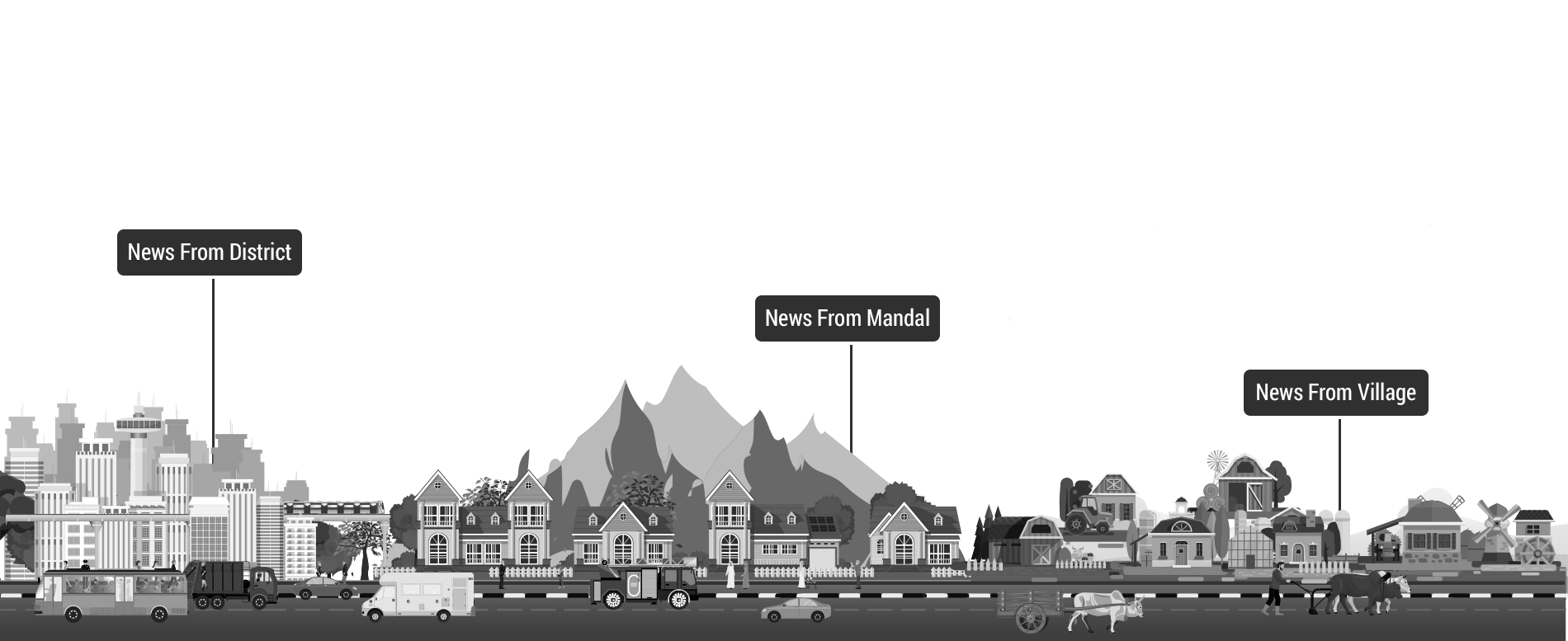
Way2News, India's largest hyperlocal news app covers news from 400 districts and generating more than 4 billion screen views every month - that's 3 times the entire Indian population. In the evolving landscape of operating systems, few

Let your friends read the news you intend to share with them.
Travel, Health, Finance & many more- Pick Magazines of your favourite topic and lay back to read.
Cinema, Business or sports, read the News from the category of your preference.
Reading in dark? Then make it better for your eyes with 'Night Mode'
Read the News articles at ease by just flipping them up and down.
Participate in Polls on different issues and contribute your opinion to country wide taken stats.
Read the most trendy and widely shared flips from 'Top Buzz'.
Save the articles you want to revisit by adding them to 'My bookmarks'.
Way2News brings real time news. We understand your reading preference and promise to deliver personalized news flips.

In the evolving landscape of operating systems, few projects have sparked as much niche interest as Phoenix OS. Designed to bridge the gap between the mobile-first Android ecosystem and the traditional desktop PC, Phoenix OS offered a unique experience. Among its various iterations, version 3.6.1.564 stands out as a particularly refined and stable release for users seeking a lightweight, Windows-like Android environment.

Based on , Phoenix OS v3.6.1.564 was never about having the latest kernel or security patches. Instead, its strength lay in optimization and user experience. Released during the twilight of the Android-x86 project’s golden age, this build targeted a specific audience: gamers wanting to play mobile MOBAs and shooters with keyboard and mouse, students needing a secondary OS for light tasks, and developers testing x86 Android builds.
Despite its charm, Phoenix OS v3.6.1.564 is now a . It runs Android 7.1, meaning many modern apps (banking, newer games, updated social media) either refuse to install or crash due to outdated API requirements. The project itself was abandoned shortly after this release, as the developers shifted focus to a never-completed Phoenix OS v4.0 (based on Android 9) and later to the controversial "PhoenixOS Darkmatter" community forks.
Phoenix OS v3.6.1.564 is not a daily driver in 2026. It is a relic, but a well-crafted one. For those who remember the dream of running Android apps seamlessly on a PC—without the overhead of emulators like BlueStacks—this version represents the peak of that vision. It is stable, functional, and a bittersweet reminder of what could have been. If you find an old laptop and want to give it a second life as a gaming or media machine, this build remains a surprisingly capable choice.
In the evolving landscape of operating systems, few projects have sparked as much niche interest as Phoenix OS. Designed to bridge the gap between the mobile-first Android ecosystem and the traditional desktop PC, Phoenix OS offered a unique experience. Among its various iterations, version 3.6.1.564 stands out as a particularly refined and stable release for users seeking a lightweight, Windows-like Android environment.
Based on , Phoenix OS v3.6.1.564 was never about having the latest kernel or security patches. Instead, its strength lay in optimization and user experience. Released during the twilight of the Android-x86 project’s golden age, this build targeted a specific audience: gamers wanting to play mobile MOBAs and shooters with keyboard and mouse, students needing a secondary OS for light tasks, and developers testing x86 Android builds.
Despite its charm, Phoenix OS v3.6.1.564 is now a . It runs Android 7.1, meaning many modern apps (banking, newer games, updated social media) either refuse to install or crash due to outdated API requirements. The project itself was abandoned shortly after this release, as the developers shifted focus to a never-completed Phoenix OS v4.0 (based on Android 9) and later to the controversial "PhoenixOS Darkmatter" community forks.
Phoenix OS v3.6.1.564 is not a daily driver in 2026. It is a relic, but a well-crafted one. For those who remember the dream of running Android apps seamlessly on a PC—without the overhead of emulators like BlueStacks—this version represents the peak of that vision. It is stable, functional, and a bittersweet reminder of what could have been. If you find an old laptop and want to give it a second life as a gaming or media machine, this build remains a surprisingly capable choice.