

Stop Kpop -
Similarly, in Japan, where colonial-era wounds are still sensitive, some right-leaning groups use the movement to protest the resurgence of Korean soft power. On the other side of the political spectrum, some Western left-leaning critics have called to "Stop Kpop" not out of nationalism, but out of a critique of cultural imperialism—arguing that K-pop’s glossy, hyper-capitalist aesthetic erodes local music scenes and promotes a narrow, often surgically-altered, beauty standard.
For every global movement, there is an equal and opposite reaction. For the past decade, the Korean Wave (Hallyu) has swept across the globe, with K-pop at its vanguard—a multi-billion dollar industry selling out stadiums from São Paulo to London. Yet, alongside the millions of passionate fans, a persistent and often vitriolic counter-movement has taken root: the "Stop Kpop" phenomenon. stop kpop
In a digital economy driven by algorithms, engagement is engagement—positive or negative. By devoting so much energy to stopping K-pop, the movement paradoxically fuels the very machine it seeks to destroy. K-pop’s dominance is not threatened by its haters; it is fueled by them. The "Stop Kpop" phenomenon is, ultimately, a testament to the genre's power. You only try so hard to silence something that you secretly fear you cannot ignore. Similarly, in Japan, where colonial-era wounds are still
At first glance, "Stop Kpop" appears to be a simple matter of musical taste. Critics argue the music is "manufactured," the industry a "sweatshop" for idols, or the lyrics meaningless. But to dismiss it as mere genre-bashing is to miss a far more complex and troubling picture. The movement is less a unified boycott and more a convergence of several distinct, often overlapping, antagonisms. For the past decade, the Korean Wave (Hallyu)
Click here for more info.
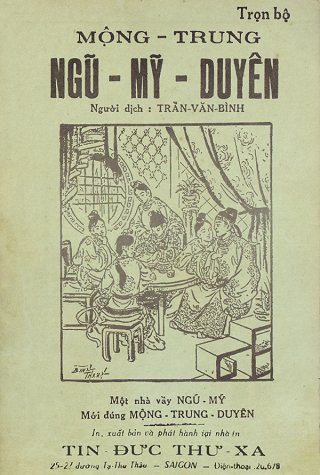
Mộng Trung Ngũ Mỹ Duyên
•
Trần Văn Bình

