
Our Google Maps scraper tool makes it easy to extract data from Google Maps quickly and efficiently. Try it for free.
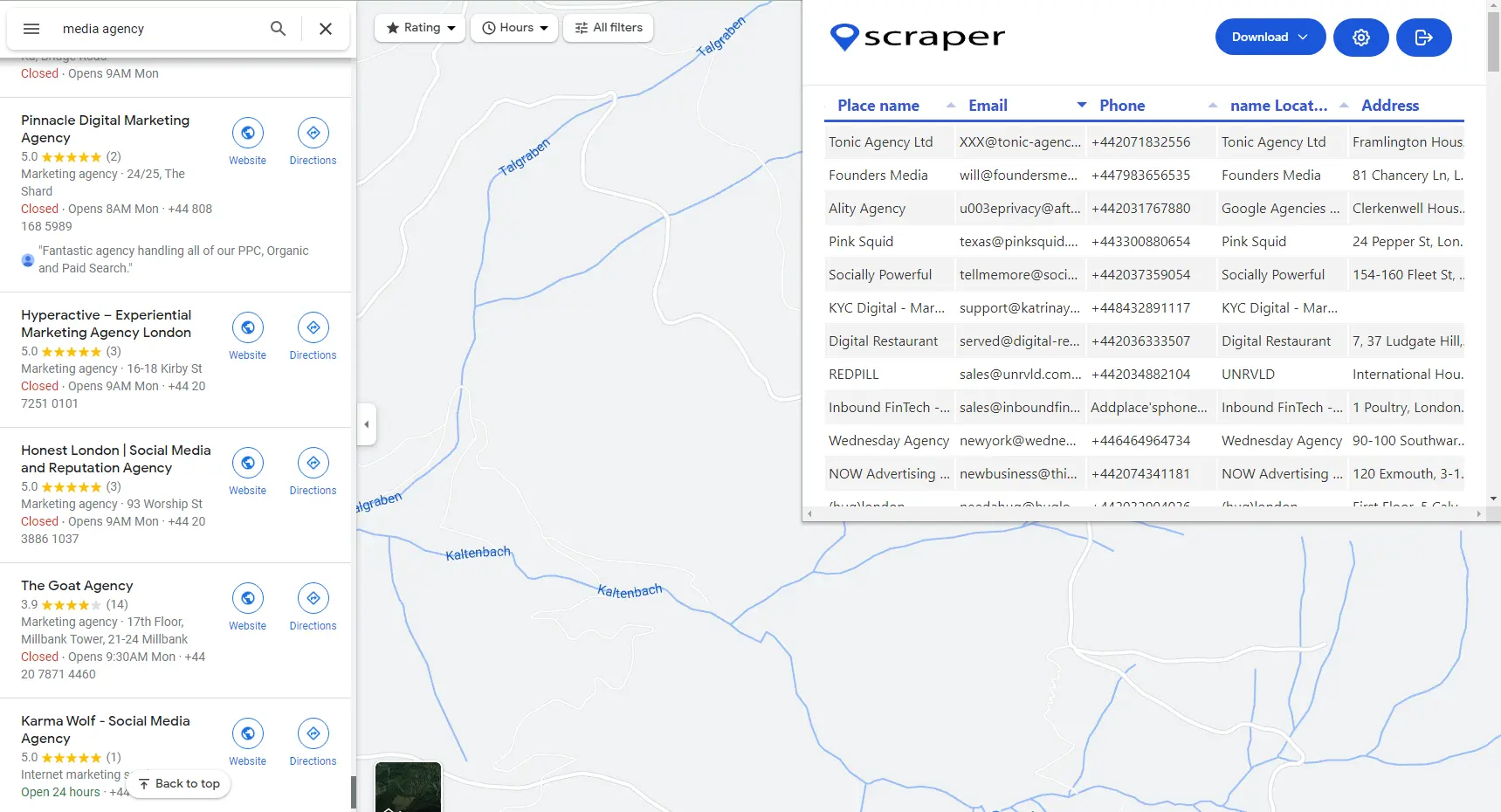
Easy to use, our Google Maps Scraper tool is user-friendly and does not require any technical expertise to use. This makes it easy for anyone to collect and analyze data from Google Maps.
Manually collecting data from Google Maps can be time-consuming and tedious. A scraper tool can automate the process and extract the data much faster, saving you time and effort..
More info
A scraper tool can extract a wide range of data from Google Maps, including information such as business names, email, phone number, addresses, ratings, reviews, and more.
More info
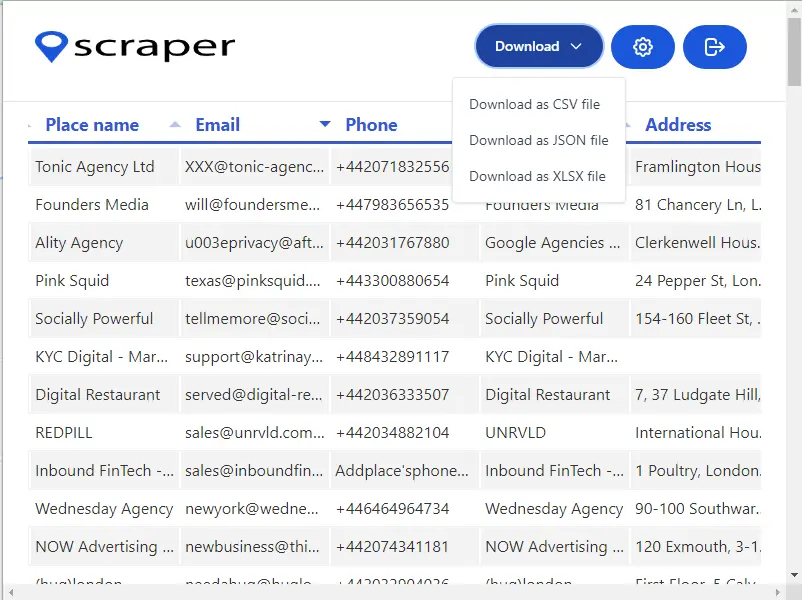
Take control of your data with our Google Maps scraper tool. With the ability to export extracted data in a variety of formats, such as CSV, Excel, or JSON, you'll be able to use your results with other applications or analysis tools to get the most out of your data. Whether you're looking to gain insights, create reports, or integrate your data with other systems, our tool has you covered. Don't let your data be trapped in one place - start getting the most out of it today!
More infoIf you are running an older AMD system and you see this file in a folder named C:\AMD\Support\ or within a driver installation temp directory, it is likely benign. It is simply a leftover from a driver update that attempted to patch a display output bug or improve stability on a specific GPU model. In this context, the file can be safely deleted after the update is complete.
In the world of PC hardware troubleshooting, few sights are more frustrating for a technician than an unbootable system. You press the power button, the fans spin, the lights glow, but the screen remains a void of black. Often, the culprit is corrupted firmware. Among the cryptic file names that surface in recovery logs and driver caches is a peculiar string: upd07044.bin . upd07044.bin
It serves as a reminder that behind every mysterious system file lies a specific, often mundane purpose. In the case of upd07044.bin , it is a digital scalpel: safe in the hands of a technician updating a driver, but dangerous if wielded by malware—or by a user who flashes the wrong BIOS to their card. If you are running an older AMD system
At first glance, it looks like a random filename generated by a buggy piece of software. However, for users of specific legacy hardware—particularly certain models of ATI/AMD Radeon graphics cards from the late 2000s and early 2010s—this file is a familiar ghost. Contrary to the fear it may inspire, upd07044.bin is not a virus, nor is it corrupted Windows system file. It is a firmware update payload . Specifically, it is associated with the GPU BIOS (Video BIOS) update utility, often packaged with legacy AMD Catalyst drivers or standalone flashing tools. In the world of PC hardware troubleshooting, few
Where upd07044.bin gains its legendary status is in the GPU recovery process . If a BIOS flash fails (due to a power outage or incorrect version), the graphics card may become "bricked"—outputting no signal. Advanced users sometimes rename a known-good BIOS file to upd07044.bin and place it on a bootable USB drive alongside an automated recovery script. The GPU, in its emergency failsafe mode, looks for this specific filename to reflash itself back to life.
Treat upd07044.bin with curiosity, not panic. Check its file path, verify its signature, and when in doubt, let it be. Just don’t double-click it unless you are absolutely sure you’re ready to update your firmware.