Usb Network Joystick -bm- Driver May 2026
Join the 4m players who have used the Aiming.Pro aim trainer to practice, train and improve their FPS aim skills
Start Aim Training





Join the 4m players who have used the Aiming.Pro aim trainer to practice, train and improve their FPS aim skills
Start Aim Training
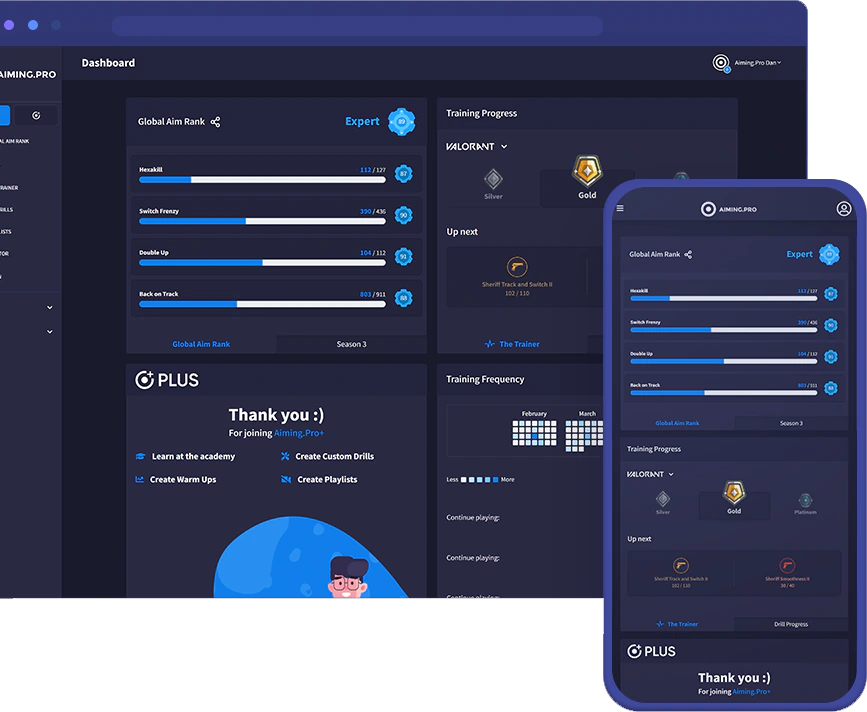
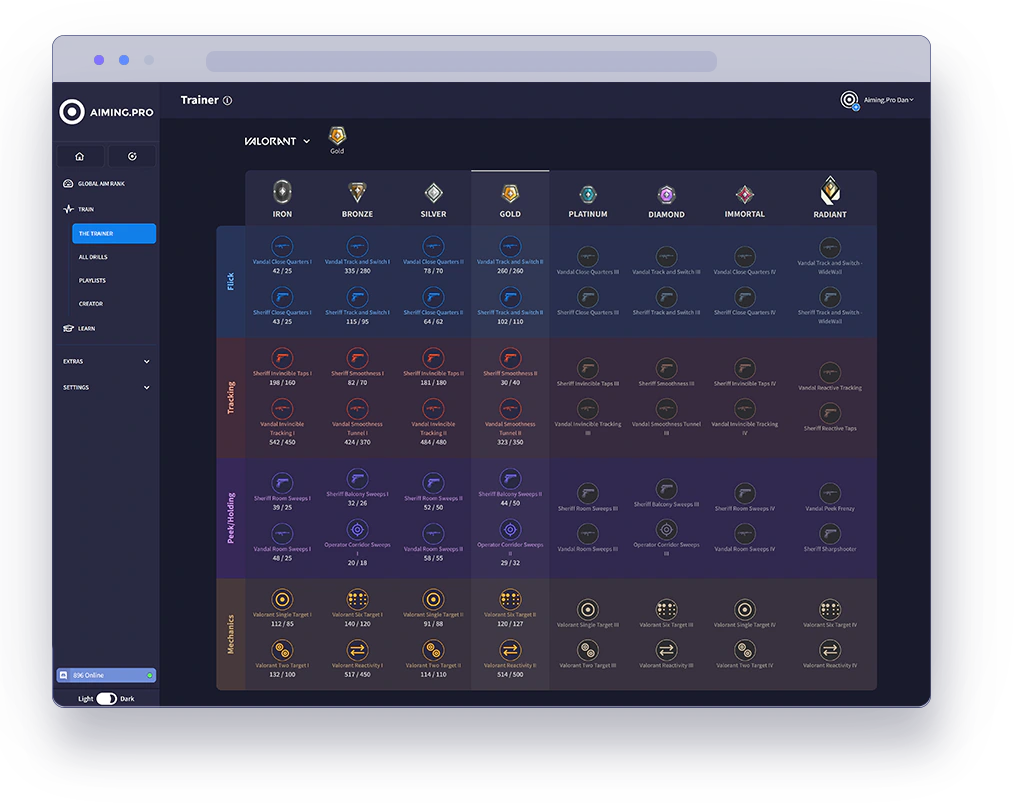
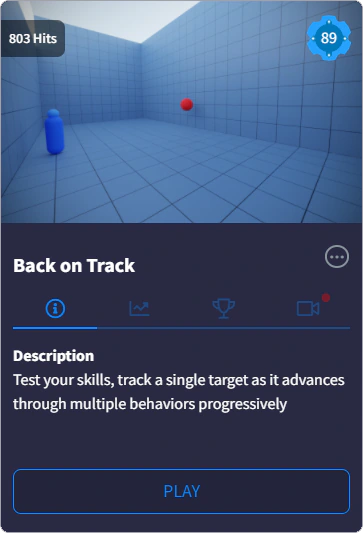
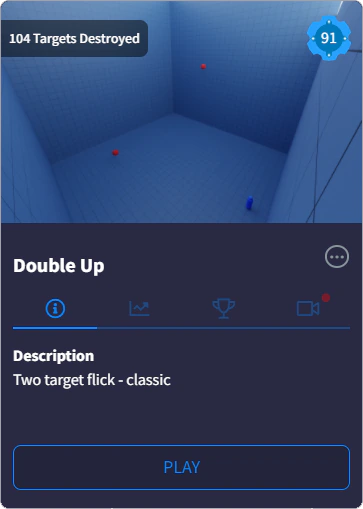
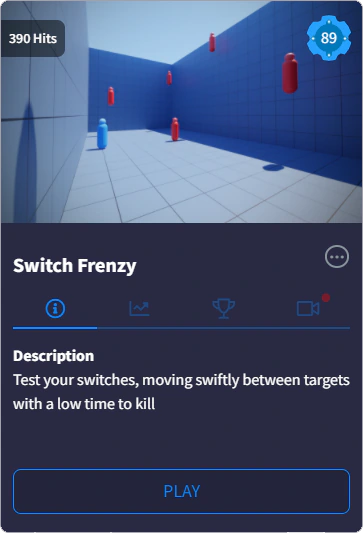
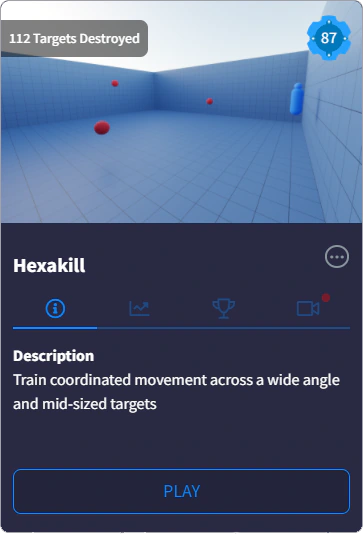
The Trainer is the best way to rank up in specific
FPS games using our aim trainer.
Our pros have analysed each game’s core concept
to carefully select drills that optimise your aim in the
areas that count. Hit the target goal in each level
and keep moving forwards to join the elite ranks of
Valorant, Apex, CSGO and COD.
Start your journey with The Trainer now
to unleash your full gaming potential.





See how you stack up against millions of players in our global community. Getting ranked lets you compete in our latest season of drills and weekly challenges.
Rank your aim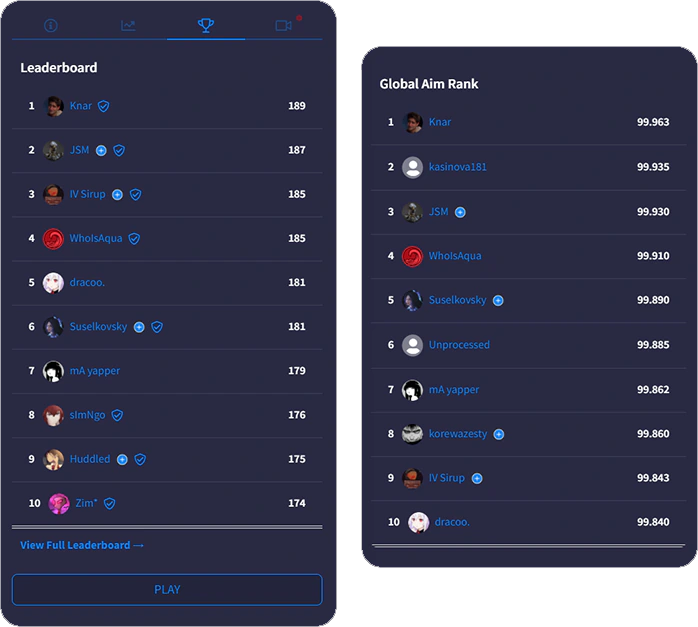
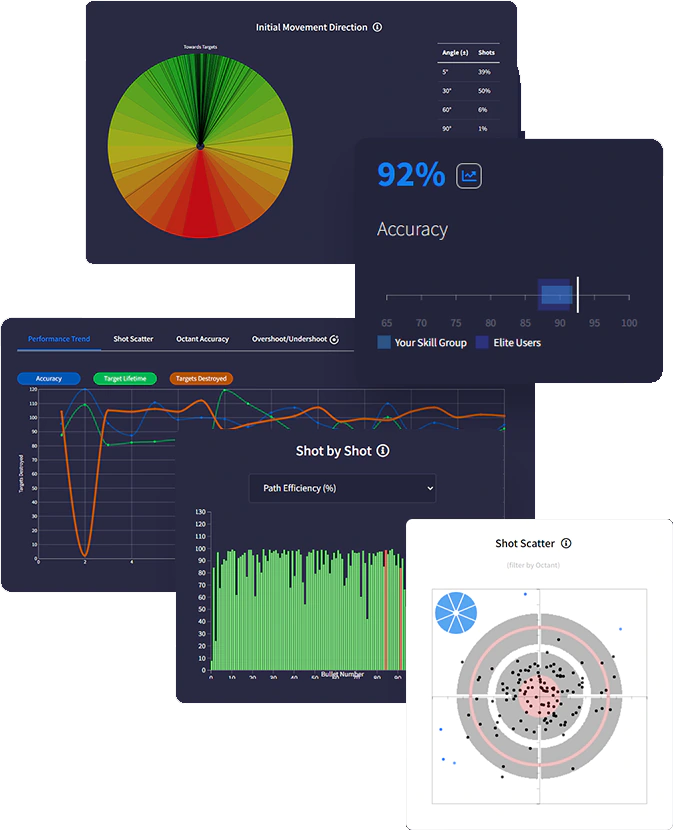
Get a deeper understanding of your performance with
with advanced data tracking. Discover insights that
uncover your strengths & weaknesses so you know
exactly how to optimise using actionable feedback.
Track everything after each drill with tons of metrics
measuring accuracy, reaction times, mouse speed,
move angles and more - the most in-depth analytics
ever built in an aim trainer.
Intelligently predict effective routines on evaluation of
your stats and trends. Analysing performance data
gives personalised feedback recommending skill areas for optimisation.
We support total synchronicity with all favourite FPS games. Our mouse sensitivity, FOV conversion, weapons and ADS variability accurately match real gaming physics ensuring all your aim gains translate into actual improved gameplay.

Sync sensitivity settings
to all FPS games

Adjust FOV to match
in-game preferences

Recreate ADS zoom &
sensitivity for every scope

Match weapon parameters
including rate of fire

Customise crosshair, hit
markers, textures & targets

Add your own sounds for
shots, hits, spawn & more
Despite its utility, the USB Network Joystick BM Driver suffers from three fundamental constraints: latency, configuration complexity, and lack of modern security features.
Finally, the driver lacks . Sending raw input data over UDP without TLS means any device on the same network could potentially inject spurious joystick commands into the client machine, a critical vulnerability for any professional training system. usb network joystick -bm- driver
At its heart, the BM Driver (often referred to in forums as "Button Box & Joystick over IP") operates on a client-server model. The architecture consists of two primary components. On the host machine—the computer physically connected to the USB joystick—a server application runs. This server captures raw HID (Human Interface Device) reports from the joystick, including axis positions (X, Y, Z, throttle, rudder) and digital button states. It then packages this data into small UDP or TCP packets and streams them across a local area network (LAN) or, theoretically, the internet. Despite its utility, the USB Network Joystick BM
The BM Driver finds its primary utility in scenarios where physical proximity between the user and the processing computer is undesirable or impossible. The most prominent use case is in . In professional or high-end amateur flight simulators, a single physical cockpit may contain dozens of USB devices (yokes, throttles, MFDs, switch panels). Rather than routing all USB cables to a single gaming PC, which can lead to USB bandwidth contention and cable management nightmares, a builder can connect groups of peripherals to low-cost "satellite" computers. The BM Driver then transmits the data over Ethernet to the main rendering PC, effectively creating a distributed input system. At its heart, the BM Driver (often referred
Another application is . A developer debugging a joystick driver on a virtual machine (VM) can use the BM Driver to feed real hardware signals into the VM without passing the USB controller through, which can be unstable. Additionally, for remote co-piloting scenarios, a student pilot could share their joystick inputs over the internet with an instructor for real-time analysis, though this is rarely practical due to latency.
The USB Network Joystick BM Driver occupies a vital but narrow stratum of input device software. It elegantly solves the problem of network-transparent USB HID forwarding by creating a virtual device at the operating system level. For the dedicated flight simulation enthusiast building a distributed cockpit or the engineer testing hardware drivers remotely, it is an invaluable tool. However, its technical requirements—namely tolerance for latency and comfort with kernel-level configuration—prevent it from achieving mainstream adoption. As networking speeds increase with technologies like 5G and Wi-Fi 6, and as USB-over-IP matures, the principles embodied by the BM Driver will likely become more common. For now, it remains a testament to the ingenuity of hobbyist programmers who refuse to let a few meters of copper cable stand between their hands and their digital sky.