Zooskool Miss F -

Instantly convert JPG images into OBJ files with our fast, free online tool. No software installation required. Download compatible 3D models ready for editing or texturing in your preferred software.
Three stages of a 3D character model of a green furry creature with big eyes and pink horns, including a rendered image, a full-color 3D model, and a gray sculpt.
Convert Image to 3D Model
seperator

Intricate geometry details

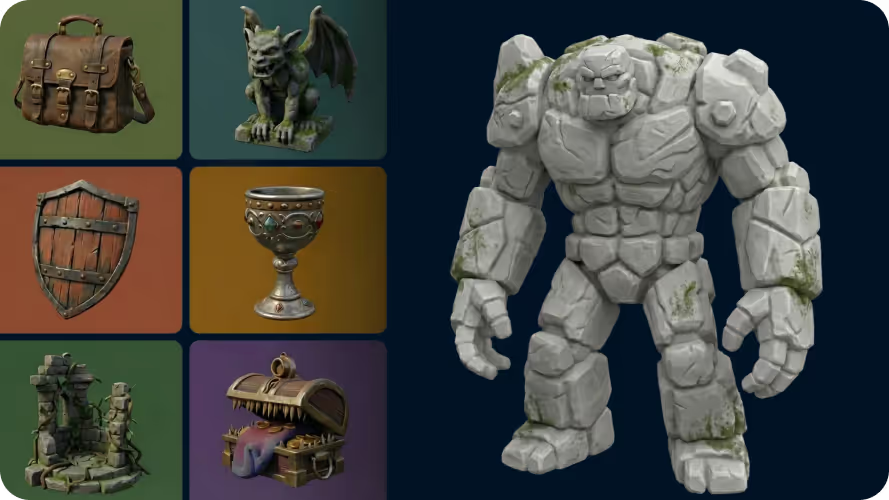
Maintain your designs or images with our advanced AI conversion engine. We ensure that your generated 3D models capture the intricate shapes and fine details of the original 2D input for breathtaking realism.
3d models

Superior Texture Quality

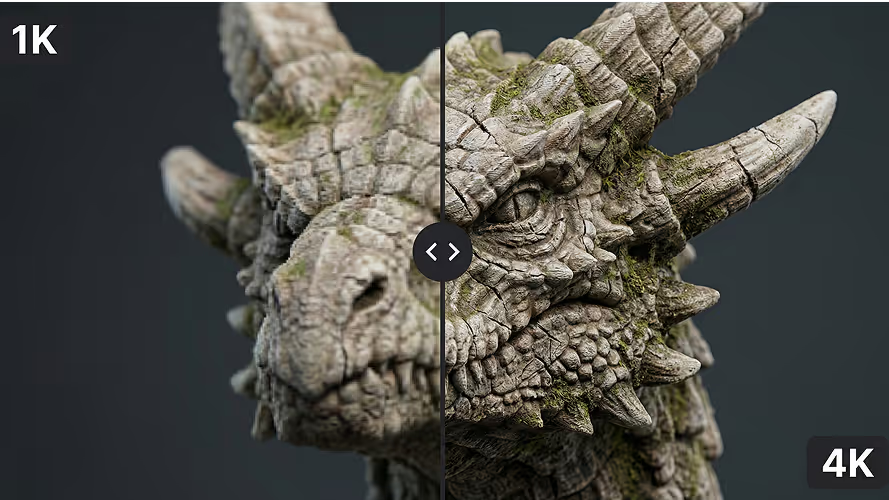
Unlock professional-grade assets with our smart AI Texturing technology. Our system delivers crisp, high-resolution textures, ensuring accurate color reproduction and high-fidelity surfaces that look natural in any lighting environment.
3d models

Universal Style Adaptation

Convert photorealistic portraits or stylized game props with no quality loss. We support a vast range of styles, ensuring that the unique "look and feel" of your image is preserved in the transition to 3D.
3d models
seperator

How to Convert JPG to OBJ

1. Import a JPG image

Go to our Image to 3D tool and simply drag and drop your file into the upload zone. We support major formats including JPG, PNG, and WEBP (Max file size: 20MB).

2. Convert to OBJ model

Hit the “Generate” button to convert your image to 3D. Within moments, the tool creates detailed geometry and textures automatically, with no 3D modeling skills or external software required.

3. Download your file

Once the processing finishes, click download to save your new OBJ file. Turn a static 2D image into a usable 3D asset in seconds, saving you hours of manual modeling time.

For decades, veterinary science focused primarily on physiology and pathology: fixing broken bones, curing infections, and managing organ failure. Today, a quiet revolution is taking place. has moved from a niche specialty to a cornerstone of modern animal healthcare.

When we picture a trip to the vet, we often think of stethoscopes, thermometers, and vaccination syringes. But in the exam room, there is an invisible, complex dialogue happening. A dog’s tucked tail, a cat’s flattened ears, or a rabbit’s sudden stillness isn’t just background noise—it is vital clinical data.

Here is why understanding why an animal acts the way it does is just as critical as understanding how its body works. In human medicine, a doctor asks, "Where does it hurt?" In veterinary medicine, the patient cannot answer with words. Instead, they use behavior.

These are veterinarians who have completed a residency in psychiatry and behavior. They bridge the gap between neurology, pharmacology, and learning theory.

So the next time you visit your vet, watch closely. The most important diagnostic tool in the room isn't the ultrasound machine. It’s the way the veterinarian watches the patient walk through the door. That observation of behavior isn't just soft skill—it's hard science.

Sloyd 3D treasure chests in multiple styles

3D doesn't have to be a time sink

Generate now